phantom of the opera pdf

The Phantom of the Opera PDF: A Comprehensive Guide

Navigating the world of The Phantom of the Opera resources online often leads to seeking PDF versions․ These PDFs encompass libretti,
screenplays, and summaries, offering diverse access points to this iconic musical’s narrative and lyrical depth․

From complete works by George C․ Perry to deluxe script versions found on platforms like Studocu, and even Joel Schumacher’s screenplay,
digital formats provide convenient study and enjoyment for enthusiasts․

Understanding copyright and legality is crucial when sourcing these PDFs, with options ranging from free archives to official Concord Theatricals publications․

What is “The Phantom of the Opera”?

“The Phantom of the Opera” is a globally renowned musical, born from Gaston Leroux’s 1910 novel, Le Fantôme de l’Opéra․ The story centers around a disfigured musical genius, known only as the Phantom, who haunts the Paris Opera House․ He falls obsessively in love with the beautiful soprano, Christine Daaé, and becomes her devoted teacher, manipulating events to propel her career․

The narrative unfolds within the opulent, yet shadowy, world of the opera house, exploring themes of love, obsession, and societal rejection․ The Phantom’s lair, a subterranean world beneath the opera, becomes a central location, symbolizing his isolation and tormented soul․ Christine finds herself torn between her affection for the Phantom and her childhood friend, Raoul, creating a dramatic love triangle․

Andrew Lloyd Webber’s 1986 musical adaptation dramatically expanded the story’s reach, becoming one of the longest-running shows in Broadway history․ The musical’s success has led to numerous recordings, film adaptations, and, importantly, the proliferation of script and libretto PDFs, allowing fans to delve deeper into the story’s intricacies․

The Novel vs․ The Musical: Key Differences

While Andrew Lloyd Webber’s musical draws heavily from Gaston Leroux’s novel, significant differences exist․ The novel provides a more detailed backstory for the Phantom, Erik, revealing a complex history of persecution and a greater emphasis on his architectural and engineering skills․ The musical streamlines this, focusing more intensely on the romantic entanglement between Erik, Christine, and Raoul․

Leroux’s novel features a more intricate plot with additional characters and subplots, including a Persian detective who plays a crucial role in unraveling the Phantom’s mysteries․ The musical simplifies these elements, prioritizing the emotional core of the story and the spectacle of the music․

PDF versions of both the novel and the libretto highlight these distinctions․ Examining script PDFs reveals the lyrical and dramatic choices made to adapt the narrative for the stage, often omitting or condensing details present in the original text․ The musical amplifies the romantic and dramatic tension, while the novel offers a broader, more nuanced exploration of the Phantom’s character and motivations․

Finding PDF Versions of the Libretto

Locating PDF versions of The Phantom of the Opera libretto requires navigating various online resources․ Platforms like Studocu frequently host user-uploaded “Deluxe Version” PDFs, offering a complete textual representation of the musical’s script, including lyrics by Charles Hart and Richard Stilgoe․ These often include stage directions and musical cues․

The Internet Archive provides access to George C․ Perry’s complete work, which includes the history and full libretto of the stage version from 1986․ Searching specifically for “Phantom of the Opera libretto PDF” yields numerous results, though verifying the source’s legitimacy is crucial․

Reddit’s r/musicalscripts community occasionally shares links to libretto-vocal books, particularly those available through Concord Theatricals․ While complete, official PDFs may require purchase, numerous fan-created or scanned versions circulate online․ Careful consideration of copyright and legality is essential when downloading and utilizing these PDFs․

Legality and Copyright Considerations for PDFs

Downloading and using PDF versions of The Phantom of the Opera libretto necessitates careful consideration of copyright law․ The musical’s script and lyrics are protected intellectual property, primarily owned by the authors and the production company․

Unofficial PDFs found on free archive sites or peer-to-peer sharing platforms may infringe upon these copyrights․ While often available, their use for public performance or distribution is strictly prohibited without obtaining the necessary licenses from Concord Theatricals․

Purchasing official libretto-vocal books from Concord Theatricals ensures legal access and supports the creators․ These versions are explicitly licensed for specific uses, such as study or personal enjoyment․ Utilizing PDFs obtained through legitimate channels minimizes legal risks and respects the intellectual property rights of those involved in the production․

Always verify the source and licensing terms before downloading or utilizing any PDF version of the libretto;

Free PDF Resources: Online Archives and Websites

Several online platforms offer access to PDF resources related to The Phantom of the Opera, though legality should always be verified․ The Internet Archive stands out, hosting George C․ Perry’s complete work, providing historical context and the original libretto․

Websites like PDFCOFFEE․COM compile various versions, including full libretti with original and revised lyrics, and optional scene directions․ However, users should exercise caution regarding copyright restrictions when utilizing these resources․

Studocu, a platform for students, often features uploaded copies of the full libretto, though these may be unofficial and subject to copyright․ Reddit’s r/musicalscripts community occasionally shares links to resources, including Concord Theatricals libretto-vocal books, but availability varies․

Librero provides a summarized PDF, offering a quick overview of the plot, detailing Christine’s encounters with the Phantom and his subsequent obsession․

Librero’s Summary PDF: A Quick Overview

Librero’s PDF provides a concise distillation of The Phantom of the Opera’s complex narrative, serving as an excellent entry point for those unfamiliar with the story․ This document focuses on the core plot elements, efficiently outlining the central conflict and character dynamics․

The summary details Christine Daaé’s initial experiences with the mysterious “Phantom of the Opera,” highlighting how his musical tutelage captivates her․ It clearly illustrates the Phantom’s growing obsession with Christine, driven by his belief in her exceptional talent and his own isolation․

Crucially, the PDF outlines the Phantom’s drastic actions – specifically, his kidnapping of Christine and her subsequent confinement within his elaborate underground lair․ This summary efficiently conveys the escalating tension and the perilous situation Christine finds herself in․

While not a comprehensive script or libretto, Librero’s offering is valuable for quickly grasping the foundational storyline and key motivations driving the characters within this enduring musical․

The Internet Archive: Accessing George C․ Perry’s Complete Work

The Internet Archive stands as a significant resource for accessing a complete version of The Phantom of the Opera, specifically George C․ Perry’s work․ This digital library offers a scanned copy of Perry’s adaptation, providing a historical perspective on the story before Andrew Lloyd Webber’s musical adaptation․

Notably, the Internet Archive’s offering isn’t solely the story itself; it includes a detailed history surrounding the play’s origins and evolution․ This contextual information enriches the reading experience, allowing users to understand the work’s place within theatrical history․

The item size is substantial – 463․5MB – indicating a comprehensive document․ This includes the complete libretto used as the basis for Webber’s stage version, initially mounted in 1986․ It’s a valuable resource for comparing and contrasting different iterations․

Researchers and enthusiasts alike can benefit from this freely available resource, offering a deep dive into the foundational text that inspired a global phenomenon․

Studocu and Full Libretto PDFs

Studocu emerges as a popular platform for accessing a “Deluxe Version” of The Phantom of the Opera’s full libretto in PDF format․ This version, uploaded by users, provides a comprehensive textual representation of the musical, offering a valuable resource for study and performance preparation․

The document clearly credits Andrew Lloyd Webber for the music and Charles Hart and Richard Stilgoe for the lyrics, establishing its authenticity as a representation of the stage production․ It’s often utilized by students and performers seeking a complete script․

Notably, Studocu’s offering includes the original lyrics, allowing for a direct comparison with any revised versions encountered elsewhere․ This is particularly useful for understanding the evolution of the musical’s narrative and poetic expression․

While availability can vary, Studocu consistently hosts full libretto PDFs, making it a reliable starting point for those seeking a complete textual experience of this beloved musical․

Concord Theatricals Libretto-Vocal Book Availability

Concord Theatricals offers an official libretto-vocal book for The Phantom of the Opera, representing a legally obtained and professionally prepared resource․ This isn’t typically available as a free PDF, but rather as a purchase through their platform or authorized theatrical retailers․

The libretto-vocal book provides a complete script alongside the musical score, making it ideal for directors, musical directors, and performers preparing a production․ It ensures access to the definitive version authorized by the creators․

Discussions within the /r/musicalscripts subreddit on Reddit frequently mention Concord Theatricals as the source for obtaining a legitimate copy of the script and score․ This highlights its importance within the theatrical community․

Although a free PDF version isn’t readily available from Concord Theatricals, investing in their official publication guarantees accuracy and supports the ongoing rights of the creators and the integrity of the work․

Analyzing the Script: Charles Hart and Richard Stilgoe’s Lyrics

PDF versions of The Phantom of the Opera libretto, particularly those sourced from platforms like Studocu, provide invaluable opportunities for in-depth lyrical analysis․ The combined work of Charles Hart and Richard Stilgoe is central to the musical’s emotional impact․

Examining the lyrics within a PDF allows for close reading, identifying recurring motifs, and tracing the development of characters like Christine Daaé and the Phantom․ The poetic quality and dramatic function of each song become more apparent․

Researchers and students can easily search for specific phrases or themes within the digital text, facilitating comparative analysis of original and revised lyrics, as sometimes found in different PDF versions․

The lyrical complexity, blending romance, obsession, and tragedy, is best appreciated through detailed study․ Access to a complete PDF script unlocks a deeper understanding of Hart and Stilgoe’s contribution to this theatrical masterpiece․

PDFs of the Joel Schumacher Screenplay

Locating PDF versions of Joel Schumacher’s 2004 Phantom of the Opera screenplay offers a unique perspective on the adaptation process from stage to screen․ These PDFs reveal how the musical’s narrative was translated into a visual medium․

The screenplay PDFs showcase Schumacher’s directorial vision, including detailed scene descriptions and character interactions not fully captured in the final film․ They provide insight into deleted scenes and alternative approaches to key moments․

Analyzing the screenplay alongside the libretto highlights the changes made during adaptation, such as expansions of certain plot points or alterations to the musical numbers’ staging․ This comparative study is invaluable for film scholars․

While not as readily available as libretto PDFs, these screenplays offer a fascinating glimpse behind the scenes of a major motion picture adaptation, revealing the creative choices made in bringing the Phantom’s story to a wider audience․

Understanding the Structure of the PDF Script

PDF versions of The Phantom of the Opera script, whether from the stage production or Joel Schumacher’s film, generally follow a standard dramatic script format․ This includes scene headings indicating location and time of day – for example, “INT․ OPERA HOUSE ⎼ NIGHT․”

Character names are typically capitalized before their dialogue, with stage directions enclosed in parentheses․ These directions detail actions, expressions, and set changes, providing crucial context for performance or visualization․

Musical numbers are clearly marked, often with headings indicating the song title and any accompanying orchestration notes․ Lyrics are presented in a distinct format, separate from spoken dialogue and stage directions․

Deluxe versions, like those found on Studocu, may include additional notes regarding character motivations or historical context․ Understanding this structure allows for efficient navigation and deeper analysis of the script’s content․

Key Scenes Found in PDF Script Versions

PDF script versions consistently feature pivotal scenes central to The Phantom of the Opera’s narrative․ The opening auction at the Opera Populaire, establishing the opera house’s history and the Phantom’s presence, is a common inclusion․

Christine’s vocal lessons with the Phantom, particularly within his underground lair, are prominently featured, showcasing their complex relationship and his musical influence․ These scenes are rich in dialogue and dramatic tension․

The masquerade ball is another frequently included scene, highlighting the Phantom’s grand entrance and his attempts to woo Christine amidst the opulent setting․ The chaos and spectacle are vividly described․

The confrontation during “The Point of No Return” and the subsequent descent into the Phantom’s lair are crucial, often detailed extensively in PDF scripts․ These scenes build to the climax of the story, revealing the Phantom’s desperation and Christine’s ultimate choice․

The Phantom’s Lair: Descriptions in the PDF

PDF script versions consistently dedicate significant detail to describing the Phantom’s lair, emphasizing its unsettling and labyrinthine nature․ Descriptions often highlight the subterranean location beneath the Opera Populaire, a world hidden from Parisian society․

The lair is frequently depicted as a complex network of tunnels, chambers, and waterways, reflecting the Phantom’s isolation and genius․ Visual elements like flickering candlelight, rough-hewn stone, and macabre decorations are common features;

Scripts often emphasize the contrast between the lair’s darkness and the opulent world above, symbolizing the Phantom’s rejection of societal norms․ The presence of torture chambers and past victims’ remnants adds to the lair’s sinister atmosphere․

Detailed accounts of the Phantom’s organ, a central element within the lair, are prevalent, underscoring his musical prowess and control over his domain․ The lair is portrayed as both a sanctuary and a prison, reflecting the Phantom’s tormented psyche․

Christine Daaé’s Role: Insights from the PDF

PDF versions of The Phantom of the Opera libretto reveal Christine Daaé’s pivotal role as the object of the Phantom’s obsession and a symbol of artistic purity․ Scripts detail her initial innocence and burgeoning talent, quickly attracting the Phantom’s attention․

The PDFs showcase Christine’s internal conflict – torn between her affection for Raoul and the Phantom’s manipulative influence․ Her vocal training with the Phantom is meticulously outlined, highlighting his belief in her potential․

Scripts emphasize Christine’s bravery and compassion, particularly during her captivity in the Phantom’s lair․ Her ultimate decision to show the Phantom kindness, rather than fear, is a central theme․

PDF analyses demonstrate how Christine’s character arc embodies the musical’s exploration of love, sacrifice, and the power of music․ Her journey from naive chorus girl to celebrated soprano is a testament to her resilience and inner strength․

Navigating PDF Versions: Original vs․ Revised Lyrics

PDF copies of The Phantom of the Opera libretto often present a fascinating challenge: discerning between original and revised lyrics․ Early drafts, sometimes found in online archives, may contain verses later cut or altered during the musical’s development․

Deluxe versions, like those available on Studocu and through PDFCOFFEE․COM, frequently include both original and newer lyrical options, allowing for comparative analysis․ These PDFs are invaluable for understanding the evolution of key songs․

Researchers and performers utilize these variations to gain deeper insight into the composers’ intentions and the nuances of character development․ Identifying changes reveals shifts in narrative emphasis and emotional impact․

Careful examination of PDF metadata and version notes can help pinpoint the origin and revision history of specific lyrics․ Recognizing these differences enhances appreciation for the artistry and collaborative process behind this enduring musical․


printable new home construction checklist pdf

I. Pre-Construction Planning (6 Headings)

Planning is key! Utilize a printable checklist, perhaps a PDF from Template.net, to organize phases like blueprints (self-prepared or architect-designed) and crucial permit acquisition.

Stay on track with material sourcing, cost estimates, and contact information (906.482.0404, 1.866.482.0404) for a smooth build process.

Initial Budget & Financing

Establishing a realistic budget is the cornerstone of any successful home construction project. A comprehensive printable checklist, often available as a PDF, should dedicate significant space to detailed cost estimations.

Begin by outlining all anticipated expenses, starting with blueprint costs – whether self-prepared or sourced from an architect (consider names and associated fees). Next, factor in permit costs, varying by county of construction.

Crucially, the checklist must include sections for material suppliers and laborers, with dedicated fields for estimated costs for each item. Don’t forget to allocate funds for potential overruns – a common occurrence in construction.

Financing options should also be documented. Consider mortgage pre-approval, construction loans, and contingency funds. Keep contact information readily available, such as 906.482.0404 or the toll-free number 1.866.482.0404, for lenders and financial advisors.

Regularly update this section of the checklist as quotes are received and decisions are made, ensuring financial control throughout the building process.

Land Acquisition & Survey

Securing the right land and understanding its characteristics is paramount. A detailed printable checklist, ideally in PDF format, must prioritize land acquisition and a thorough survey process.

Document the address of the new home site meticulously. Verify zoning regulations and any potential restrictions before finalizing the purchase. The checklist should include space to record the legal description of the property and all associated closing costs.

A professional land survey is non-negotiable. This survey will identify property lines, easements, and potential environmental concerns. Record the surveyor’s contact information and the date of the survey within the checklist.

Pay close attention to site preparation requirements. Will excavation be needed? Are there any existing structures that require demolition?

The checklist should also prompt you to investigate utility access – water, sewer, electricity, and gas. Document any necessary connection fees or infrastructure improvements. Maintaining a well-documented land acquisition and survey process is vital for a smooth build;

Blueprint & Design Review

A comprehensive blueprint and design review is crucial before breaking ground. Your printable new home construction checklist PDF should dedicate significant space to this phase.

First, determine blueprint sourcing: self-prepared or architect-designed (record architect’s name). Thoroughly review all architectural drawings, including floor plans, elevations, and sections. Ensure they align with your vision and local building codes.

Structural engineering plans are equally important. Verify that the design can withstand local weather conditions and seismic activity. Pay close attention to foundation details, framing specifications, and roof design.

Mechanical, electrical, and plumbing (MEP) plans must be scrutinized. Confirm proper placement of outlets, fixtures, and HVAC systems.

The checklist should prompt a review of material specifications – windows, doors, roofing, siding. Document all selections and associated costs. Finally, obtain a signed and dated approval from all relevant parties before proceeding. A detailed review minimizes costly changes later.

Permits & Approvals

Securing necessary permits and approvals is a critical step, and your printable new home construction checklist PDF must prioritize this. Begin by identifying all required permits from the county of construction – building, electrical, plumbing, HVAC, and potentially others.

The checklist should detail each permit application process, including required documentation (blueprints, site plans, surveys). Track submission dates and approval timelines diligently. Contact information for the permitting office (potentially 906.482.0404) should be readily available.

Don’t overlook inspections! The checklist should outline required inspections at each stage of construction – foundation, framing, electrical, plumbing, final. Schedule inspections proactively to avoid delays.

Some areas require zoning approvals or homeowner association (HOA) reviews. Include these in your checklist. Maintain copies of all permits and approvals on-site throughout the construction process. Failure to comply can result in costly fines and project halts.

Homeowner’s Insurance Setup

Your printable new home construction checklist PDF should include a dedicated section for homeowner’s insurance. This isn’t something to address at the build’s completion; proactive setup is vital.

Begin by researching insurance providers and obtaining quotes. You’ll likely need builder’s risk insurance during construction, covering potential damage or loss. Transitioning to a standard homeowner’s policy upon completion is crucial.

The checklist should prompt you to gather necessary documentation for quotes – blueprints, estimated construction costs, and property details. Compare coverage options carefully, considering liability, dwelling coverage, and personal property protection.

Document policy numbers, agent contact information (consider 906.482.0404 or 1.866.482.0404 for potential resources), and renewal dates. Ensure the policy aligns with the project’s value and your risk tolerance. Don’t delay; securing insurance early protects your investment.

Selecting a General Contractor

A comprehensive printable new home construction checklist PDF must prioritize General Contractor selection. This is arguably the most critical pre-construction step, impacting budget, timeline, and quality.

Your checklist should detail the vetting process: verifying licenses, insurance (liability and worker’s compensation), and checking references. Obtain multiple bids, comparing not just price, but also scope of work and proposed schedules.

Scrutinize the contract thoroughly. It should clearly outline payment terms, change order procedures, dispute resolution mechanisms, and warranty details. Look for a contractor with a proven track record and positive reviews.

Document all communication, bids, and contract details within your checklist. Consider their experience with similar projects and their communication style. Don’t hesitate to ask detailed questions – a good contractor will be transparent and responsive. (Resources like phone numbers 906.482.0404 or 1.866.482.0404 might be helpful for initial inquiries).

II. Foundation & Site Work (5 Headings)

Site preparation is crucial! A checklist PDF should track excavation, foundation pouring, waterproofing, and drainage – ensuring a solid base for your new home build.

Site Preparation & Excavation

Detailed site preparation is paramount, and a comprehensive printable checklist, often available as a PDF, is invaluable. Begin by verifying property lines and easements, ensuring compliance with local regulations. Clear the building site of all vegetation, rocks, and debris, documenting the removal process for potential environmental considerations.

Excavation depth must align precisely with the foundation plans, accounting for frost lines and soil conditions. Soil testing is critical to determine load-bearing capacity and drainage requirements. The checklist should include verification of utility locates before digging commences – a vital safety step.

Proper grading is essential for directing water away from the foundation. Erosion control measures, like silt fences, should be implemented and regularly inspected. Document all excavation activities with photographs and notes, noting any unexpected soil conditions or obstructions encountered. A well-maintained checklist ensures a smooth and structurally sound foundation process, minimizing future issues.

Foundation Pour & Curing

The foundation pour is a critical stage, demanding meticulous attention to detail, best tracked with a printable checklist (often a PDF). Prior to pouring, verify formwork integrity, ensuring it’s level, braced, and capable of withstanding concrete pressure. Rebar placement must strictly adhere to engineering specifications, inspected before the concrete arrives.

Concrete delivery tickets should be carefully reviewed to confirm mix design and volume. Proper consolidation – vibrating the concrete – eliminates air pockets and ensures strength. Curing is vital; maintain consistent moisture levels for the specified duration (typically 7 days) using methods like covering with plastic or applying curing compounds.

Temperature monitoring during curing is crucial, especially in extreme weather. Document the pour date, concrete mix details, and curing methods. Regular inspections for cracks or defects are essential. A detailed checklist ensures a strong, durable foundation, the bedrock of your new home.

Waterproofing & Drainage

Protecting your foundation from water damage is paramount, and a comprehensive checklist (often available as a printable PDF) is invaluable. Exterior waterproofing typically involves applying a membrane or coating to foundation walls, preventing moisture intrusion. Pay close attention to seams and penetrations, ensuring they are thoroughly sealed.

Proper drainage is equally crucial. This includes installing a perimeter drain tile system (French drain) around the foundation footing, directing water away from the structure. Backfilling with gravel around the drain tile enhances its effectiveness. Grading the soil away from the foundation is essential, creating a slope to channel water away.

Inspect downspouts and gutters, ensuring they discharge water well away from the foundation. Document all waterproofing materials used and drainage system details on your checklist. Regular inspections during and after installation are vital to identify and address any potential issues.

Backfilling & Grading

Backfilling around the foundation is a critical step, requiring careful attention to detail, and should be documented on your new construction checklist (printable PDF format is ideal). Compaction is key – soil must be compacted in layers to prevent settling and ensure stability. Avoid using large rocks or debris in the backfill, as these can create voids.

Grading the surrounding land is essential for proper water drainage. A minimum slope of 6 inches over the first 10 feet away from the foundation is generally recommended. This directs water away, preventing it from pooling and potentially damaging the foundation. Ensure positive drainage throughout the yard, avoiding low spots where water can accumulate.

Consider the final landscaping plan during grading, as it will impact drainage patterns. Document the type of soil used for backfill and grading, as well as the compaction methods employed. Proper backfilling and grading are vital for the long-term health of your home.

Underground Utilities Installation

Underground utility installation – encompassing water, sewer, gas, and electrical lines – demands meticulous planning and adherence to local codes. Your printable new home construction checklist PDF should include dedicated sections for each utility. Prioritize safety; locate and mark all existing underground lines before digging. Coordinate with utility companies to schedule connections and inspections.

Proper trench depth and backfilling are crucial to protect these lines from damage. Use appropriate bedding material, like sand, to cushion the pipes and cables. Pressure test water and sewer lines before backfilling to identify leaks. Electrical conduit must be installed according to code, with proper grounding.

Document all utility locations and specifications for future reference. Include as-built drawings showing the exact route of each line. Thorough documentation, facilitated by a detailed checklist, ensures smooth inspections and prevents costly repairs down the line.

III. Framing & Enclosure (5 Headings)

A detailed checklist PDF is vital for framing, sheathing, and roofing. Ensure inspections occur before enclosing the structure, verifying code compliance and structural integrity.

Framing Inspection

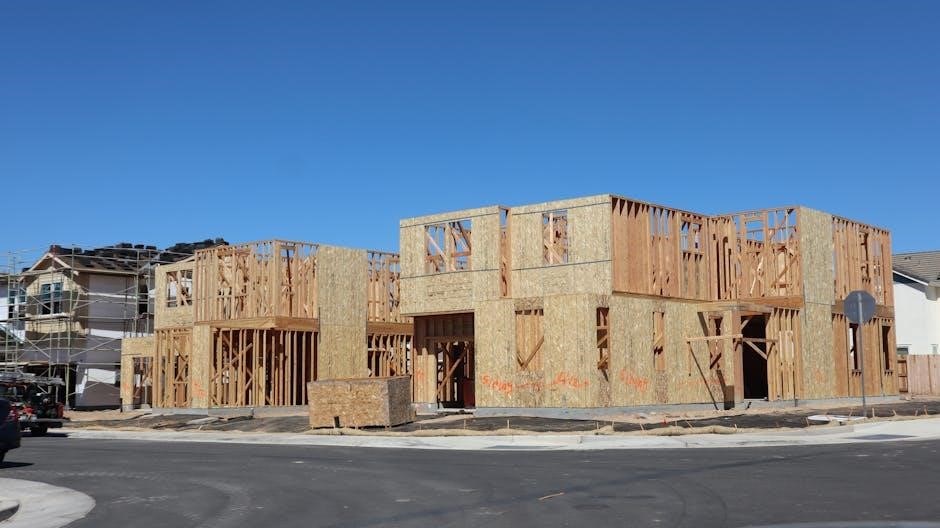
Critical to structural integrity, the framing inspection requires a thorough checklist, often found within a comprehensive new home construction PDF. Before insulation or wall coverings are installed, a qualified inspector verifies adherence to approved blueprints and local building codes.

Key areas of focus include proper lumber grading, correct nailing schedules, appropriate header sizes over windows and doors, and secure connections between framing members. The checklist should prompt verification of bracing, ensuring the structure can withstand wind and seismic loads.

Documentation is essential; the inspection report, detailing any deficiencies, must be addressed and re-inspected. A printable checklist helps track these corrections. Don’t proceed without a signed-off framing inspection – it’s a foundational step for a safe and durable home. Utilizing a PDF checklist ensures no critical element is overlooked during this vital phase.

Remember to keep records of all inspections and approvals for future reference and potential resale.

Roof Trusses & Sheathing

A robust roof begins with proper truss installation, a crucial step detailed in any thorough printable new home construction checklist PDF. Verify the correct truss type and placement according to the approved blueprints. Ensure proper bracing is in place to maintain truss stability during sheathing installation.

Sheathing, typically plywood or OSB, must be securely fastened to the trusses with appropriate nailing patterns; The checklist should prompt inspection for correct sheathing thickness and grade, ensuring it meets load requirements. Gaps between sheathing panels should be minimal, preventing water intrusion.

Pay close attention to overhangs and their proper support. A detailed checklist will remind you to verify these critical areas. Proper installation of both trusses and sheathing forms the foundation for a weather-tight and structurally sound roof. Document all steps for inspection purposes.

Don’t skip this step; a compromised roof can lead to significant issues down the line.

Exterior Wall Sheathing & House Wrap

Exterior wall sheathing provides structural support and a nailing surface for siding. A comprehensive printable new home construction checklist PDF will emphasize verifying the correct sheathing material – typically plywood or OSB – and its proper thickness based on engineering specifications. Ensure consistent nailing patterns are followed, avoiding gaps or protrusions.

House wrap, a vital moisture barrier, is installed over the sheathing. The checklist should prompt a thorough inspection for proper overlap of seams and secure fastening to prevent water infiltration while allowing breathability. Pay attention to openings around windows and doors, ensuring they are properly flashed and sealed.

Correct installation of both sheathing and house wrap is paramount for preventing structural damage and maintaining energy efficiency. Document all steps and materials used for inspection records. A detailed checklist ensures no critical step is overlooked, safeguarding the home’s integrity.

Prioritize quality; a well-sealed exterior is essential.

Window & Door Installation

A printable new home construction checklist PDF should dedicate significant attention to window and door installation, as improper installation leads to drafts, water damage, and energy loss. Verify all units arrive undamaged and match the approved plans. The checklist should prompt a check for proper flashing around all openings before unit placement.

Ensure windows and doors are plumb, level, and square during installation; Shimming is crucial for proper operation and sealing. The checklist should include verifying the correct fasteners are used and that they are properly sealed to prevent air and water infiltration. Pay close attention to the manufacturer’s instructions.

Inspect operation of each unit – opening, closing, locking – and check for smooth movement. Document any discrepancies immediately. A thorough checklist ensures a weathertight and secure enclosure, contributing to the home’s comfort and longevity.

Don’t skip details; proper installation is key!

Roofing Installation

A comprehensive printable new home construction checklist PDF must prioritize roofing installation, as it’s the first line of defense against the elements. Begin by verifying the roof deck is properly installed and secured, ensuring it meets local building codes. The checklist should prompt inspection for proper underlayment application – a critical moisture barrier.

Confirm the chosen roofing material (shingles, tile, metal) is installed according to the manufacturer’s specifications. Pay close attention to overlap, nailing patterns, and flashing details around chimneys, vents, and valleys. Proper flashing prevents leaks and extends the roof’s lifespan.

Document all installation details and any deviations from the plan. A final inspection should verify a secure and watertight roof system. This is a crucial step for protecting the entire structure from weather damage and ensuring long-term durability.

Quality roofing is paramount; verify every detail!

IV. Interior Systems (4 Headings)

A detailed PDF checklist guides plumbing, electrical, and HVAC rough-ins. Confirm proper insulation installation, adhering to energy efficiency standards, for a comfortable, cost-effective home.

Plumbing Rough-In

Essential plumbing rough-in checks, detailed within a comprehensive new home construction checklist (often available as a printable PDF), are critical before drywall installation. Verify all supply lines – hot and cold water – are correctly positioned and adequately supported, preventing future leaks or damage.

Inspect drain, waste, and vent (DWV) systems meticulously. Ensure proper slope for effective drainage, and confirm all connections are secure and watertight. Pay close attention to fixture locations, verifying alignment with planned sinks, toilets, showers, and tubs.

Pressure test the system to identify any leaks in the piping before it’s concealed behind walls. This proactive step can save significant time and expense later. Document all inspections and approvals, referencing the checklist for completeness. A well-executed plumbing rough-in is foundational for a functional and reliable home.

Remember to confirm accessibility for future maintenance and repairs, adhering to local plumbing codes and regulations. Utilizing a checklist ensures no crucial step is overlooked during this vital phase.

Electrical Rough-In

The electrical rough-in phase, meticulously outlined in a printable new home construction checklist PDF, demands careful attention to detail. Begin by verifying the placement of all electrical boxes for outlets, switches, and fixtures, ensuring they align with the approved blueprints and homeowner specifications.

Inspect wiring runs throughout the house, confirming correct gauge wiring is used for each circuit and that all cables are securely fastened and protected. Pay close attention to areas requiring special attention, such as kitchens, bathrooms, and outdoor spaces.

Grounding and bonding are paramount for safety. Ensure the electrical panel is properly grounded and that all metallic components are bonded according to code. A thorough inspection, guided by the checklist, will identify potential hazards.

Document all wiring diagrams and circuit assignments for future reference. Prior to inspection, test for shorts and proper grounding. A well-executed electrical rough-in is crucial for a safe and functional home.

HVAC Installation & Ductwork

A comprehensive checklist PDF for new home construction highlights the critical importance of proper HVAC installation and ductwork. Begin by verifying the correct sizing of the HVAC unit based on the home’s square footage and insulation levels, ensuring optimal efficiency.

Inspect ductwork installation, confirming all seams are sealed with mastic or foil tape to prevent air leaks. Proper insulation of ductwork within unconditioned spaces is essential for minimizing energy loss. Ensure duct runs are appropriately sized and supported.

Verify the placement of vents and registers, ensuring balanced airflow throughout the house. Check for proper condensate drainage and that the unit is level and securely mounted.

Prior to inspection, test the system for proper operation and airflow. Document all system specifications and warranty information. A correctly installed HVAC system, guided by the checklist, provides comfort and energy savings.

Insulation Installation

A detailed new home construction checklist PDF emphasizes insulation as a cornerstone of energy efficiency. Begin by verifying the correct R-value of insulation materials for walls, ceilings, and floors, adhering to local building codes and climate zone requirements.

Inspect the installation for complete coverage, ensuring no gaps or voids exist where heat can escape or enter. Pay close attention to areas around windows, doors, and plumbing penetrations, sealing any air leaks.

Confirm proper ventilation within insulated spaces to prevent moisture buildup and potential mold growth. Check for correct installation of vapor barriers, if required by local codes.

Document the type and R-value of all insulation materials used, along with the installer’s information and warranty details. A properly insulated home, guided by the checklist, reduces energy costs and enhances comfort.

V. Finishing & Inspections (4 Headings)

Final stages! A checklist PDF guides you through drywall, trim, and crucial inspections (building, electrical, plumbing, HVAC) before landscaping completes your new home.

Drywall Installation & Finishing

Drywall is a pivotal interior step. Your printable new home construction checklist PDF should detail verifying proper drywall hanging, ensuring seams are taped and mudded correctly for a smooth surface.

Inspect for nail pops and imperfections before sanding – a crucial step for paint adhesion. Note the number of coats of joint compound applied, and confirm proper dust control measures are in place during sanding to protect air quality.

Texture matching (if applicable) should be documented, alongside the primer used. A quality finish is paramount, so the checklist should include verifying corners are crisp and square.

Don’t forget to document any repairs needed post-installation. This stage sets the foundation for painting and overall interior aesthetics, so thoroughness is key, referencing your initial material selections.

Confirm adherence to building codes regarding fire-rated drywall in specific areas, as outlined in your permits.

Interior Trim & Doors

Interior trim elevates the home’s aesthetic. A detailed printable new home construction checklist PDF should include verifying door and window casing installation, ensuring proper alignment and secure fastening. Document the type of wood or material used for trim – matching your initial material selections is vital.

Inspect door hardware installation – knobs, hinges, and locks – confirming smooth operation and secure attachment. Baseboards should be flush against the wall, and any gaps caulked for a seamless look.

Crown molding (if applicable) requires precise cuts and secure installation; document any challenges encountered. The checklist should also cover the installation of interior doors, verifying proper swing direction and latching mechanisms.

Confirm all trim is primed and ready for painting or staining. Note any custom trim details or built-ins, ensuring they align with the approved blueprints.

Address any damage or imperfections promptly to maintain a high-quality finish.

Final Inspections (Building, Electrical, Plumbing, HVAC)

A comprehensive checklist PDF is crucial for final inspections. Begin with the building inspection, verifying adherence to all local codes and approved plans. Document any required corrections and ensure they are completed before proceeding.

Electrical inspections confirm safe wiring, proper grounding, and functioning outlets/fixtures. The plumbing inspection verifies leak-free pipes, correct drainage, and compliant fixture installations.

HVAC inspections ensure efficient system operation, proper ductwork sealing, and adherence to energy efficiency standards. Maintain detailed records of all inspection reports and approvals.

Address any failed inspections immediately, scheduling re-inspections promptly. A printable checklist helps track progress and ensures all systems meet safety and code requirements.

Obtain Certificates of Occupancy after passing all inspections, signifying the home is safe and habitable.

Landscaping & Exterior Finishes

Utilize your printable new home construction checklist PDF to meticulously track exterior completion. Begin with grading and ensure proper drainage away from the foundation, preventing future water damage.

Exterior finishes include siding installation, painting or staining, and the application of any decorative elements. Confirm all work aligns with the original design plans and homeowner preferences.

Landscaping is a key component, encompassing lawn seeding or sod installation, planting trees and shrubs, and creating garden beds. Consider irrigation systems for efficient watering.

Walk the property with your contractor, noting any deficiencies or incomplete tasks. Document everything with photos for a clear record. A detailed checklist ensures a polished and aesthetically pleasing exterior.

Finalize exterior lighting and walkways for safety and curb appeal. Confirm all exterior elements meet local regulations and homeowner expectations.

nevada title application with lien holder pdf

Nevada Title Application with Lien Holder PDF: A Comprehensive Guide

Navigating Nevada’s vehicle titling process with a lien holder requires a specific PDF application (NV DMV Form 388). This guide details accurate completion and submission.

Understanding the Nevada Title Application Process

The Nevada Department of Motor Vehicles (DMV) mandates a formal application process for obtaining a vehicle title, especially when a lien holder is involved. This process ensures legal ownership is correctly documented and transferred. Successfully navigating this requires understanding the specific requirements and utilizing the correct forms, primarily the NV DMV Form 388, available online in PDF format.

Accuracy is paramount; incomplete or incorrect information will cause delays or rejection. The application gathers crucial details about the vehicle, its owner, and the lien holder. Digital solutions like DocHub facilitate easy editing, signing, and sharing of the PDF form, eliminating the need for software installation. The completed application serves as official documentation for establishing ownership and recognizing any financial claims against the vehicle.

Essentially, the process validates the transfer of ownership and legally acknowledges the lien holder’s interest in the vehicle, protecting both parties involved. Familiarizing yourself with these steps upfront streamlines the entire titling experience.

What is a Vehicle Title?

A vehicle title is a legal document establishing ownership of a vehicle in the state of Nevada. It’s more than just a certificate; it’s proof you have the right to possess and operate the vehicle. The title contains vital information, including the Vehicle Identification Number (VIN), the owner’s name and address, and any existing liens against the vehicle.

When a vehicle is sold or transferred, the title is used to legally transfer ownership to the new owner. Nevada’s DMV utilizes a specific application, NV DMV Form 388 (available as a PDF), to facilitate this process. If a loan or financing is involved, a lien holder – typically a bank or lending institution – will be listed on the title, indicating they have a financial interest in the vehicle.

The title protects both the owner and any lien holders, providing a clear record of ownership and any associated financial obligations. It’s a crucial document for vehicle registration, insurance, and resale.

The Role of a Lien Holder in Vehicle Titling

A lien holder, such as a bank or financing company, has a legal claim against a vehicle until a loan is fully repaid. This financial interest is documented directly on the Nevada vehicle title. When applying for a title with a lien holder, their information is crucial for accurate processing using the NV DMV Form 388 PDF.

The lien holder’s details – including their full legal name and address – must be accurately provided on the application. They essentially co-own the vehicle with the registered owner until the debt is satisfied. The lien holder’s signature, often requiring notarization, confirms their agreement to the terms of the lien.

Upon loan repayment, the lien holder releases their interest, and the title can be updated to reflect clear ownership by the vehicle owner. Properly recording the lien protects the lender’s investment and ensures a smooth title transfer process.

When is a Lien Holder Application Required?

A Nevada title application requiring lien holder information is necessary whenever a vehicle is purchased with a loan or financed. This includes new and used vehicle purchases where a lender retains a financial interest. If you’ve taken out a loan to cover the vehicle’s cost, the lien holder’s details must be included on the NV DMV Form 388 PDF.

Specifically, if a bank, credit union, or other financial institution provided funding for the vehicle, they will be listed as the lien holder. The application process ensures their claim is legally recognized on the official title. Even if the loan is through the dealership, they will act as the initial lien holder until the loan is transferred.

Essentially, any situation involving a debt secured by the vehicle necessitates a lien holder application to accurately reflect ownership and financial obligations.

Required Documents and Information

Successfully applying for a Nevada title with a lien holder demands specific documentation, including the NV DMV Form 388, VIN verification, and detailed owner/lien holder data.

Nevada Title Application Form (NV DMV Form 388)

The NV DMV Form 388 is the cornerstone of the Nevada vehicle title application process, especially when a lien holder is involved. This official form meticulously gathers all essential details required for legally transferring vehicle ownership and recording the lien. It’s readily available for download in PDF format directly from the Nevada Department of Motor Vehicles (DMV) website, ensuring applicants always have access to the most current version.

Accuracy is paramount when completing this form. It requests critical information such as the vehicle identification number (VIN), comprehensive owner details, and precise lien holder information. Failing to provide accurate data can lead to significant delays or even rejection of your application. The form is designed to be user-friendly, but careful review before submission is strongly advised. DocHub and similar platforms offer convenient online editing and signature capabilities, streamlining the completion process. Remember to save your completed form before submitting!

Vehicle Identification Number (VIN) Verification

A crucial step in the Nevada title application, particularly with a lien holder, is meticulous VIN verification. The Vehicle Identification Number serves as the vehicle’s unique fingerprint, ensuring accurate identification and preventing fraud. The NV DMV Form 388 requires the VIN to be entered precisely as it appears on the vehicle and its existing documentation.

Verification can be completed through various methods accepted by the Nevada DMV. A physical inspection of the VIN, comparing it to the location on the vehicle (typically the dashboard or doorframe), is standard practice. In some cases, a VIN verification performed by a licensed Nevada dealer or a DMV inspection station may be required. Ensure the VIN is legible and free from any alterations. Any discrepancies must be addressed before submitting the application to avoid processing delays or rejection. Accurate VIN entry is fundamental to a successful title transfer.

Lien Holder Information: What You Need to Provide

When completing the Nevada Title Application (NV DMV Form 388) with a lien holder, providing accurate and complete information is paramount. You’ll need the full legal name of the lien claimant – this must match official records exactly. Include the lien holder’s complete mailing address, where official correspondence regarding the vehicle title will be sent.

Crucially, the application requires details confirming the lien holder’s interest in the vehicle. This often involves specifying the amount of the outstanding loan or lien. The lien holder must also sign the application in the designated area, and this signature typically requires notarization to validate its authenticity. Ensure the lien holder understands their responsibilities and provides all requested information promptly. Failure to do so will likely cause significant delays in processing your title application.

Owner Information: Details Required on the Application

The Nevada Title Application (NV DMV Form 388) demands comprehensive owner details for accurate processing. You must provide your full legal name, precisely as it appears on your identification. Your complete residential address is also required; this is where the DMV will send your title and any related notices.

Furthermore, the application necessitates your date of birth and driver’s license or identification card number. Accurate vehicle information, including the Vehicle Identification Number (VIN), is crucial and must match the vehicle itself. You’ll also need to declare your ownership status and potentially provide details about how the vehicle was acquired. Ensuring all owner information is current and correct prevents delays and ensures a smooth title transfer process. Double-check all entries before submission!

Completing the Nevada Title Application with Lien Holder PDF

Accurately filling out Nevada’s Form 388 is essential; carefully follow instructions, provide all requested details, and ensure the lien holder section is correctly completed.

Step-by-Step Guide to Filling Out the Form

Begin by downloading the official Nevada Title Application (NV DMV Form 388) in PDF format from the Nevada DMV website. Carefully read all instructions before starting. First, complete the vehicle information section with the Vehicle Identification Number (VIN) and details about the vehicle itself.

Next, thoroughly fill out the owner information section, ensuring all details match your official identification. The lien holder section requires the full legal name of the lien claimant and their contact information. Double-check this information for accuracy, as errors can cause delays.

Sign and date the application in the designated areas. Remember that lien holder signatures often require notarization, so be prepared to visit a notary public. Review the entire form one last time to confirm all information is correct before submitting. Saving a copy for your records is also highly recommended.

Section for Vehicle Owner Details

This crucial section of the Nevada Title Application (Form 388) demands meticulous attention to detail. You must provide your complete legal name, precisely as it appears on your driver’s license or official identification. Your current residential address is also required; ensure it’s accurate for all official correspondence.

Further details include your date of birth and contact phone number. If the ownership is different from the registered owner, clearly explain the relationship. You’ll also need to declare how you acquired the vehicle – purchase, gift, inheritance, etc; – and provide relevant dates.

Accuracy is paramount; discrepancies between this section and your supporting documentation can lead to application rejection. Double-check all entries before proceeding to the lien holder section, ensuring consistency and completeness throughout the entire form.

Section for Lien Holder Details

The Lien Holder section of the Nevada Title Application (Form 388) requires the full legal name of the lien claimant – the financial institution or entity holding a security interest in the vehicle. Include their complete mailing address; this is where official notifications regarding the vehicle will be sent.

Critically, the lien holder must sign and date the application in the designated area. This signature acknowledges their consent to the title transfer with the lien recorded. Notarization of this signature is often required, so confirm Nevada’s current requirements.

Ensure the lien holder provides their Federal Tax ID number or Employer Identification Number (EIN). Accurate information prevents delays and ensures proper lien recording. Verify all details with the lien holder before submitting the application to avoid rejections.

Notarization Requirements for Lien Holder Signatures

Nevada generally mandates notarization of the lien holder’s signature on the NV DMV Form 388, though requirements can shift, so verification is crucial. A notary public must witness the authorized representative of the lien holder signing the application.

The notary will verify the signer’s identity using acceptable identification and then affix their seal or stamp and signature to the document. This confirms the authenticity of the signature and prevents fraudulent activity. Failure to properly notarize the lien holder’s signature is a common reason for application rejection.

Some lien holders may have pre-printed notarization language on their letterhead, which can be attached to the application instead of a separate notarization form. Always check the latest DMV guidelines to ensure compliance with current Nevada regulations regarding notarization.

Submitting Your Application

Completed Nevada title applications, including lien holder details, can be submitted via mail or in person at a DMV office for efficient processing.

Where to Submit the Completed Application

For submitting your Nevada Title Application with Lien Holder details (NV DMV Form 388), you have several convenient options. You can mail the completed and notarized form, along with any required fees, to the Nevada Department of Motor Vehicles (DMV) headquarters. The specific mailing address can be found on the DMV’s official website, ensuring accurate delivery.

Alternatively, you can submit the application in person at any Nevada DMV office. A list of office locations and their operating hours is readily available online. Visiting in person allows for immediate submission and the opportunity to address any questions you might have with a DMV representative.

Before submitting, double-check that all sections are fully completed, signed, and notarized as required. Incorrect or incomplete applications may experience delays in processing. Utilizing the DMV’s website for the most current address and requirements is highly recommended.

Acceptable Methods of Submission (Mail, In-Person)

The Nevada DMV provides flexibility in how you submit your completed Title Application with Lien Holder information. Mailing is a popular option; ensure you send the application via certified mail with return receipt requested for proof of delivery. This is particularly important when dealing with original documents. Include a check or money order payable to the Nevada DMV for all applicable fees – cash is not accepted through the mail.

For those preferring a direct approach, in-person submission is available at any Nevada DMV office. This allows for immediate review and potential clarification of any questions. Be prepared for potential wait times, especially during peak hours. Bring all required documents, including the completed form, proof of identification, and payment for fees.

Digital submission is generally not accepted for original title applications; physical copies are required. Always verify the latest submission guidelines on the official Nevada DMV website.

Fees Associated with Title Application and Lien Recording

Understanding the costs involved is crucial when applying for a Nevada vehicle title with a lien holder. A standard title application fee applies, the amount of which can vary – it’s essential to check the current fee schedule on the Nevada DMV website for the most up-to-date information. Beyond the base title fee, a separate fee is required for recording the lien itself.

This lien recording fee ensures the lien holder’s interest in the vehicle is legally recognized. Additional fees may apply for duplicate titles or other specific services. Payment methods accepted generally include checks, money orders payable to the Nevada DMV, and debit/credit cards at in-person locations. Cash is typically not accepted.

Always confirm the total amount due before submitting your application to avoid delays. Fee waivers or reductions may be available in certain circumstances; investigate eligibility on the DMV’s official resources.

Post-Submission and Title Issuance

After submitting your Nevada title application, processing times vary. You can track your application’s status online; address any issues promptly for swift title issuance.

Title Processing Times in Nevada

Understanding Nevada’s title processing timelines is crucial for applicants, especially those involving lien holders. While the Nevada DMV doesn’t provide a guaranteed specific timeframe, typical processing can range from several weeks to a couple of months. Several factors influence this duration, including the completeness and accuracy of your application, the volume of applications the DMV is currently handling, and any potential issues requiring further investigation.

Applications with errors or missing information will inevitably experience delays as the DMV will need to contact you for clarification. Lien holder applications may also take slightly longer due to the added verification steps required to ensure the lien is properly recorded. Regularly checking the application status online is recommended. Be patient, and allow ample time for processing, particularly if you have urgent needs related to the vehicle title. Proactive follow-up with the DMV may be necessary if significant delays are encountered.

Tracking Your Title Application Status

Fortunately, the Nevada DMV offers online tools to track the progress of your title application, including those submitted with lien holder information. While a dedicated tracking number isn’t always immediately provided, you can often utilize your application receipt number or other identifying details – like your vehicle’s VIN – to check the status through the DMV’s website.

Regularly monitoring the online portal allows you to stay informed about any updates or requests for additional information. If the online system doesn’t provide sufficient detail, contacting the Nevada DMV directly via phone or email is advisable. Keep your application documentation readily available when contacting them, as they may request specific details to assist with your inquiry. Proactive tracking minimizes uncertainty and allows for timely resolution of any potential issues.

What to Do if There are Issues with Your Application

Should your Nevada title application with lien holder details encounter issues, prompt action is crucial. Common problems include incomplete information, discrepancies between submitted documents, or notarization errors. The DMV will typically notify you of these issues, often requesting additional documentation or clarification.

Carefully review the notification and address the concerns immediately. Resubmit any requested documents promptly, ensuring accuracy and completeness. If you’re unsure about the required corrections, contacting the Nevada DMV directly for guidance is highly recommended. Keep copies of all correspondence and resubmitted materials for your records. Don’t hesitate to seek assistance; resolving issues quickly streamlines the process and prevents further delays in receiving your vehicle title.

lsat preptest pdf

LSAT PrepTest PDFs: A Comprehensive Guide

MB Trac enthusiasts actively discuss modifications, repairs, and sourcing parts for their vehicles within dedicated online forums and communities, sharing valuable insights.

What are LSAT PrepTests?

LSAT PrepTests are collections of previously administered Law School Admission Test (LSAT) questions, meticulously compiled by the Law School Admission Council (LSAC). These tests serve as invaluable resources for aspiring law school candidates, providing authentic practice material mirroring the actual exam’s format, difficulty, and question types.

Each PrepTest typically includes one scored section of each of the three scored LSAT sections: Reading Comprehension, Logic Games, and Logical Reasoning. They also contain an unscored experimental section and a scored Writing Sample.

Analyzing performance on these tests allows students to identify strengths and weaknesses, refine test-taking strategies, and ultimately improve their LSAT scores. The availability of PrepTests in PDF format enhances accessibility and convenience for studying.

Why Use PDF Format for LSAT PrepTests?

PDFs offer unparalleled convenience and portability for LSAT PrepTests. Students can access practice materials on various devices – laptops, tablets, and smartphones – enabling study sessions anytime, anywhere. This accessibility is crucial for maximizing study time amidst busy schedules.

Furthermore, PDFs facilitate easy annotation and highlighting, allowing students to actively engage with the material and mark key information. Digital annotation tools enhance the review process, making it simpler to identify patterns and areas for improvement.

The format also supports efficient organization and storage of numerous PrepTests, eliminating the need for bulky physical copies. PDFs are readily shareable (within legal boundaries) and easily searchable, streamlining the study process.

Accessing LSAT PrepTest PDFs

Online MB Trac communities provide a platform for enthusiasts to connect, exchange information, and assist each other with technical challenges and restoration projects.

Official LSAT PrepTest Sources

Accessing authentic LSAT PrepTests is paramount for effective preparation, and the Law School Admission Council (LSAC) remains the primary official source. LSAC offers digital and physical PrepTests through their LawHub platform, providing a convenient and reliable method for obtaining genuine materials. Historically, older PrepTests were available for individual purchase, but the current focus is heavily on subscription-based access via LawHub Advantage.

This platform allows for timed practice, realistic test simulations, and detailed performance analytics. While older, unbound PrepTests might be found through secondary markets, verifying their authenticity is crucial. Be cautious of unauthorized sources, as the integrity of the test material is vital for accurate practice. LSAC regularly updates its offerings, so checking their official website is the best way to stay informed about available PrepTests and access options. Remember, genuine materials ensure you’re practicing with the most representative examples of the LSAT.

Third-Party Providers of LSAT PrepTest PDFs

Numerous test preparation companies offer LSAT PrepTest PDFs as part of their comprehensive course packages or as standalone resources. These providers, such as Kaplan, Powerscore, 7Sage, and The Princeton Review, often compile PrepTests into convenient digital formats, frequently including added features like detailed explanations and performance tracking. However, it’s crucial to verify the source and ensure the PDFs are legally obtained and accurately represent official LSAT content.

Some platforms offer adaptive learning technology integrated with PrepTest materials, tailoring practice to individual strengths and weaknesses. Be aware that the quality and legality of PDFs from unofficial sources can vary significantly. Prioritize reputable companies with a proven track record and transparent sourcing practices to avoid using compromised or inaccurate materials. Always cross-reference with official LSAC resources when possible.

Free vs. Paid LSAT PrepTest PDFs

The availability of LSAT PrepTest PDFs ranges from free, officially released materials to paid resources offered by test preparation companies. While LSAC provides some older PrepTests for free download, access to the most recent and complete sets typically requires a financial investment. Free PDFs may lack the supplementary features – like detailed explanations or performance analytics – found in paid versions.

Paid PrepTest PDFs often provide a more structured and efficient study experience, but it’s essential to evaluate the value proposition carefully. Consider your budget, learning style, and the level of support you require. Beware of illegally distributed PDFs, as they may be incomplete, inaccurate, or contain malware. Prioritize legitimate sources to ensure the integrity of your practice materials and avoid potential legal issues.

Understanding LSAT PrepTest Versions & Dates

MB Trac owners frequently discuss model years and specific engine types (OM 314, 352, etc.) when seeking advice on maintenance and upgrades.

The Importance of Recent PrepTests

Focusing on more recent LSAT PrepTests is crucial for effective preparation, mirroring the current exam’s structure and question types. Just as MB Trac owners prioritize maintaining their vehicles with up-to-date parts and knowledge, LSAT candidates benefit from contemporary practice materials. Older PrepTests may contain outdated logic game scenarios or reasoning patterns no longer emphasized by the LSAC.

The LSAT evolves, and recent PrepTests reflect these changes, providing a more accurate assessment of your current abilities. Utilizing these resources allows you to familiarize yourself with the nuances of the modern LSAT, enhancing your performance and building confidence. Ignoring this principle is akin to restoring a classic MB Trac with obsolete components – functionality is compromised.

Identifying PrepTest Sections and Scoring

Each LSAT PrepTest PDF contains three scored sections: Reading Comprehension, Logic Games, and Logical Reasoning. Similar to diagnosing issues within an MB Trac’s engine – identifying the OM series motor type – understanding each section’s format is vital. Each section is scored individually, contributing to your overall LSAT score.

Familiarize yourself with the scoring scale and how each question type impacts your results. PrepTests also include an unscored Experimental section and a Writing Sample. Analyzing your performance across all sections, much like a Trac enthusiast meticulously documenting repairs, reveals strengths and weaknesses, guiding focused study efforts for optimal improvement.

Digital vs. Printed PrepTests: PDF Advantages

LSAT PrepTest PDFs offer significant advantages over traditional printed materials, mirroring the modern approach to vehicle diagnostics seen in MB Trac forums. PDFs enable convenient annotation and highlighting, similar to documenting modifications on a classic tractor. Digital formats facilitate easy searching and organization, unlike bulky paper PrepTests.

Portability is key; access your PrepTests on any device. Furthermore, PDFs reduce paper waste and often offer cost savings. Just as Trac owners share repair tips online, digital access fosters collaborative study. The ability to copy/paste passages for review enhances learning, providing a flexible and efficient study experience.

Utilizing LSAT PrepTest PDFs Effectively

Like MB Trac owners meticulously documenting repairs, LSAT students should actively annotate PDFs, track performance, and create structured study schedules for optimal results.

Annotation and Highlighting Techniques

Just as MB Trac mechanics carefully diagnose issues and mark components, effective LSAT PrepTest PDF use demands strategic annotation. Employ a color-coding system: highlight key arguments in one shade, opposing viewpoints in another, and factual information distinctly. Circle unfamiliar vocabulary and jot down brief definitions directly on the PDF.

Underline crucial premises and conclusions within Logical Reasoning sections. For Reading Comprehension, annotate the main idea of each paragraph and note the author’s tone. In Logic Games, diagramming rules directly onto the PDF can be incredibly beneficial. Don’t simply highlight everything; be selective and purposeful.

Utilize PDF commenting features to add notes, questions, or reminders. This transforms a static document into a dynamic study tool, mirroring the detailed record-keeping seen in MB Trac restoration projects.

Creating a Study Schedule with PrepTests

Similar to a meticulous MB Trac maintenance schedule, a structured LSAT study plan utilizing PrepTest PDFs is crucial for success. Begin by allocating specific days for full, timed PrepTests, simulating real test conditions. Interweave these with focused review sessions dedicated to individual sections – Logical Reasoning, Reading Comprehension, and Logic Games.

Schedule dedicated time for blind review, analyzing errors without initially consulting answer explanations. Gradually increase the difficulty of PrepTests as your score improves. Incorporate spaced repetition, revisiting previously completed tests to reinforce learning.

Treat your study schedule as a commitment, much like a Trac owner’s dedication to preserving their vehicle. Consistency and discipline are key to maximizing your PrepTest PDF investment and achieving your target LSAT score.

Analyzing Your Performance on PrepTests

Just as a MB Trac mechanic diagnoses issues through careful inspection, thorough PrepTest analysis is vital. Don’t simply note your score; dissect why you missed questions. Categorize errors – timing, misunderstanding, careless mistakes – to pinpoint weaknesses. Review explanations meticulously, understanding the correct reasoning.

Utilize the PDF format to annotate frequently missed question types. Track your performance trends across multiple PrepTests, identifying areas needing focused improvement. Consider blind review, re-attempting sections without answers to assess genuine understanding.

This detailed analysis, akin to a Trac restoration project, reveals areas for refinement, maximizing your learning from each PrepTest PDF.

LSAT PrepTest Sections Breakdown (PDF Focus)

Like diagnosing a MB Trac’s components, dissecting each LSAT section within the PDF reveals strengths and weaknesses, guiding focused study efforts.

Reading Comprehension Section in PrepTests

Navigating the Reading Comprehension section within LSAT PrepTest PDFs demands a strategic approach, much like troubleshooting a complex MB Trac system. These sections assess your ability to understand, analyze, and draw inferences from dense, academic passages. PDF format allows for direct annotation – highlighting key arguments, noting author’s tone, and summarizing paragraph structures, mirroring the detailed record-keeping vital for Trac maintenance.

Focus on identifying the main idea, supporting details, and the overall purpose of each passage. Practice actively engaging with the text, questioning assumptions, and anticipating potential questions. Just as a mechanic diagnoses a Trac’s engine, you must dissect the passage’s logic. Utilize the PDF’s search function to quickly locate specific information and review challenging sections. Consistent practice with PrepTest PDFs builds crucial reading speed and comprehension skills.

Logic Games Section in PrepTests

The Logic Games section in LSAT PrepTest PDFs presents a unique challenge, akin to understanding the intricate workings of an MB Trac’s transmission. These games require you to deduce information from a set of rules and constraints, often involving sequencing, grouping, or matching. The PDF format is invaluable here, enabling you to create diagrams and notations directly onto the game board, similar to sketching out a Trac’s wiring diagram.

Mastering this section involves recognizing common game types and developing efficient diagramming techniques. Practice consistently to improve your speed and accuracy. Treat each game as a puzzle, systematically testing different scenarios and eliminating possibilities. Like diagnosing a Trac issue, methodical problem-solving is key. Utilize the PDF’s tools to track inferences and avoid redundant work;

Logical Reasoning Section in PrepTests

The Logical Reasoning section within LSAT PrepTest PDFs demands careful analysis, much like troubleshooting an MB Trac’s engine – identifying the core argument and its flaws. These questions assess your ability to understand, evaluate, and critique arguments presented in various forms. The PDF format allows for direct annotation, highlighting key premises and conclusions, mirroring the detailed notes taken during a Trac restoration.

Focus on identifying argument structures, recognizing common fallacies, and strengthening or weakening arguments. Practice consistently to improve your reading comprehension and critical thinking skills. Like understanding a Trac’s complex systems, dissecting arguments requires a systematic approach. Utilize the PDF’s features to mark up passages and track your reasoning process.

Advanced Strategies for PrepTest PDF Use

MB Trac owners often modify their vehicles; similarly, advanced LSAT users leverage PDF features like blind review and timed sections for optimal practice.

Blind Review Method with PDFs

The blind review method is a powerful technique for pinpointing weaknesses in your LSAT preparation, and PDF PrepTests are ideally suited for this approach. After completing a PrepTest, remove the answer key and re-attempt only the questions you initially marked as incorrect or unsure.

Crucially, do this without reviewing your previous reasoning. This forces you to approach each question anew, identifying flawed logic or content gaps. PDFs allow easy navigation and annotation – mark your new attempts distinctly. Compare your second attempt to the correct answers, then analyze why you missed the question both times.

Was it a misunderstanding of the concept, a careless error, or a timing issue? This iterative process, facilitated by the PDF format’s flexibility, provides deeper insights than simply checking answers. Like MB Trac enthusiasts meticulously restoring their vehicles, this method demands careful, focused analysis.

Timed Sections and Simulated Test Conditions

Replicating the actual LSAT environment is crucial for success, and LSAT PrepTest PDFs enable realistic practice. Utilize a timer to strictly adhere to the section time limits – 35 minutes for each Logical Reasoning section, 35 minutes for Reading Comprehension, and 35 minutes for Logic Games.

Minimize distractions; find a quiet space, and avoid using your phone or internet. Treat each PDF PrepTest as a full-length, high-stakes exam. Like a mechanic diagnosing an MB Trac, precision and focus are paramount.

Regularly simulating these conditions builds stamina, improves pacing, and reduces test-day anxiety. PDFs allow for easy section skipping and resuming, mirroring the LSAT’s structure. Analyze your performance under pressure to identify areas needing improvement.

Reviewing Explanations and Answer Keys

Thoroughly reviewing answer keys and explanations within LSAT PrepTest PDFs is paramount for learning. Don’t simply check if you got the answer correct; understand why the correct answer is right and why the incorrect answers are wrong.

Treat each question like diagnosing an issue with an MB Trac – pinpoint the exact flaw in your reasoning. PDFs facilitate easy navigation between questions and explanations.

Focus on patterns in your errors. Are you consistently missing questions due to a specific flaw in Logical Reasoning? Are you struggling with a particular type of Reading Comprehension passage? Detailed review unlocks improvement.

Troubleshooting Common Issues with LSAT PrepTest PDFs

Like diagnosing a vintage MB Trac, PDF issues require methodical checks: compatibility, corruption, security, and authenticity must be verified for optimal use.

PDF Compatibility and Viewing Problems

Encountering issues opening or correctly displaying LSAT PrepTest PDFs is surprisingly common. Much like troubleshooting the electrical systems on a classic MB Trac, pinpointing the source of the problem is key. Ensure you have a current version of Adobe Acrobat Reader or a compatible PDF viewer installed. Older versions may lack support for newer PDF features.

Sometimes, the PDF itself might be corrupted during download or transfer. Try re-downloading the file from the original source. If problems persist, experiment with different PDF viewers – Foxit Reader or Chrome’s built-in viewer are viable alternatives.

Furthermore, certain PDF settings, like security restrictions or complex formatting, can interfere with proper rendering. Check if the PDF requires a password or has printing/copying disabled. If the issue remains unresolved, consider contacting the provider of the PrepTest PDF for assistance.

Dealing with Corrupted or Incomplete PDFs

Similar to diagnosing issues with a vintage MB Trac’s engine, identifying and addressing corrupted or incomplete LSAT PrepTest PDFs requires a systematic approach. The first step is attempting to open the file with multiple PDF readers – Adobe Acrobat, Foxit Reader, and even web browsers can sometimes salvage partially readable documents.

If the PDF consistently fails to open correctly, re-downloading it from the original source is crucial. A failed download is a frequent cause of corruption. If re-downloading doesn’t work, contact the provider and request a fresh copy.

In rare cases, specialized PDF repair tools might recover some data, but success isn’t guaranteed. Prioritize obtaining a complete, uncorrupted version from a reliable source to avoid compromising your preparation.

Ensuring PDF Security and Authenticity

Just as MB Trac owners verify the provenance of parts to maintain their vehicle’s integrity, ensuring the security and authenticity of LSAT PrepTest PDFs is paramount. Download PDFs only from official LSAC sources or reputable, authorized providers. Be wary of links from unverified websites or peer-to-peer sharing platforms, as these may contain malware or altered PrepTests.

Verify the file size against known legitimate versions. Significant discrepancies can indicate tampering. Check for digital signatures or watermarks confirming the source.

Regularly scan downloaded PDFs with updated antivirus software. Protecting your system and the integrity of your study materials is vital for a secure and effective LSAT preparation process.

Resources for LSAT PrepTest PDF Support

Similar to MB Trac forums aiding owners, LSAT forums and online communities offer valuable support, discussions, and shared resources for PrepTest PDFs.

LSAT Forums and Online Communities

Just as MB Trac owners rely on dedicated forums for troubleshooting and sharing expertise, LSAT students benefit immensely from vibrant online communities. These platforms serve as central hubs for discussing PrepTest PDFs, specific questions, and effective study strategies. Users frequently exchange information regarding PDF sources, compatibility issues, and optimal viewing methods.

You’ll find detailed threads analyzing PrepTest sections, dissecting challenging questions, and offering alternative solution approaches. Many forums host dedicated sections for PDF-related discussions, allowing users to pinpoint specific issues or seek advice from experienced test-takers. Active participation in these communities can significantly enhance your understanding and improve your performance, mirroring the collaborative spirit found within the MB Trac enthusiast base.

Official LSAC Resources for PrepTests

Similar to how MB Trac owners consult official manuals for accurate specifications, LSAT candidates should prioritize resources directly from the Law School Admission Council (LSAC). LSAC provides access to authentic PrepTests, ensuring you’re practicing with genuine materials. While not always exclusively in PDF format initially, many older PrepTests are readily available as downloadable PDFs through LSAC’s LawHub platform.

These official resources guarantee the questions and scoring reflect the actual LSAT. LSAC also offers detailed information regarding PrepTest versions, scoring scales, and test administration procedures. Utilizing these official materials minimizes the risk of encountering inaccurate or outdated practice materials, much like relying on official documentation for your MB Trac.

Prep Course Providers Offering PDF Access

Just as MB Trac owners benefit from specialized mechanics, LSAT students often leverage prep courses for focused guidance. Many leading LSAT prep companies, like Kaplan, Powerscore, and 7Sage, incorporate official LSAT PrepTests into their course materials. Frequently, these PrepTests are provided in PDF format for convenient access and offline study.

These courses often supplement the PDFs with detailed explanations, video lessons, and personalized analytics. While requiring a financial investment, the structured approach and expert insights can significantly enhance your preparation. Consider these providers as offering a comprehensive “turbo-kit” for your LSAT engine, similar to performance upgrades for a Trac.

The Future of LSAT PrepTests and PDFs

Like the ongoing evolution of the MB Trac, the LSAT adapts; digital formats and PDF integration will likely remain crucial for accessible, flexible preparation.

LSAC’s Digital LSAT and PDF Integration

The Law School Admission Council (LSAC) has embraced a fully digital LSAT, presenting both opportunities and considerations for PDF-based preparation materials. While the test itself is now administered digitally, PrepTests in PDF format continue to offer significant value for practice and familiarization.

Just as MB Trac owners maintain and modify their vehicles, LSAT candidates benefit from working with traditional materials alongside the digital interface. PDFs allow for annotation, highlighting, and offline study – features not always readily available in digital testing platforms. LSAC acknowledges the continued relevance of PrepTests, providing access through official channels and supporting third-party providers.

The integration isn’t about replacement, but rather a complementary approach. Students can leverage PDFs for foundational practice and then transition to the digital format for timed, simulated test conditions, mirroring the actual exam experience. This blended strategy maximizes preparedness and builds confidence.

Emerging Technologies for LSAT Prep

The landscape of LSAT preparation is evolving, mirroring advancements in technology, much like the modifications seen within the MB Trac community. Artificial intelligence (AI) is increasingly integrated into study tools, offering personalized feedback and adaptive learning paths based on PrepTest performance.

Interactive PDF platforms are emerging, allowing for dynamic annotation, automated performance tracking, and seamless integration with digital LSAT interfaces. These tools go beyond static PDFs, providing a more engaging and efficient study experience. Machine learning algorithms analyze PrepTest data to identify individual weaknesses and tailor practice materials accordingly.

Virtual reality (VR) simulations are also being explored, offering immersive test-taking environments. While still nascent, these technologies promise to further enhance preparedness by replicating the pressure and conditions of the actual LSAT.

Staying Updated on PrepTest Changes

Just as MB Trac owners meticulously maintain and upgrade their vehicles, LSAT candidates must remain current with evolving test formats and content. LSAC frequently releases updates regarding PrepTest scoring, section composition, and digital testing platform features. Regularly checking the official LSAC website is crucial for accessing the latest announcements and guidelines.

Subscribing to LSAT-focused newsletters and following reputable prep course providers on social media ensures timely notification of changes. Online forums, similar to those dedicated to MB Trac discussions, serve as valuable platforms for sharing information and insights among test-takers.

Staying informed about PrepTest changes prevents surprises on test day and allows for strategic adjustments to study plans.